JournalSkin Health
Uneven Tone Is Not One Condition: A More Careful Conversation About Pigmentation
Pigmentation is rarely just a matter of choosing something to “lighten the spots”. Before treating colour, I look at the pattern, the history, the skin’s sensitivity and the factors that may be recreating it.
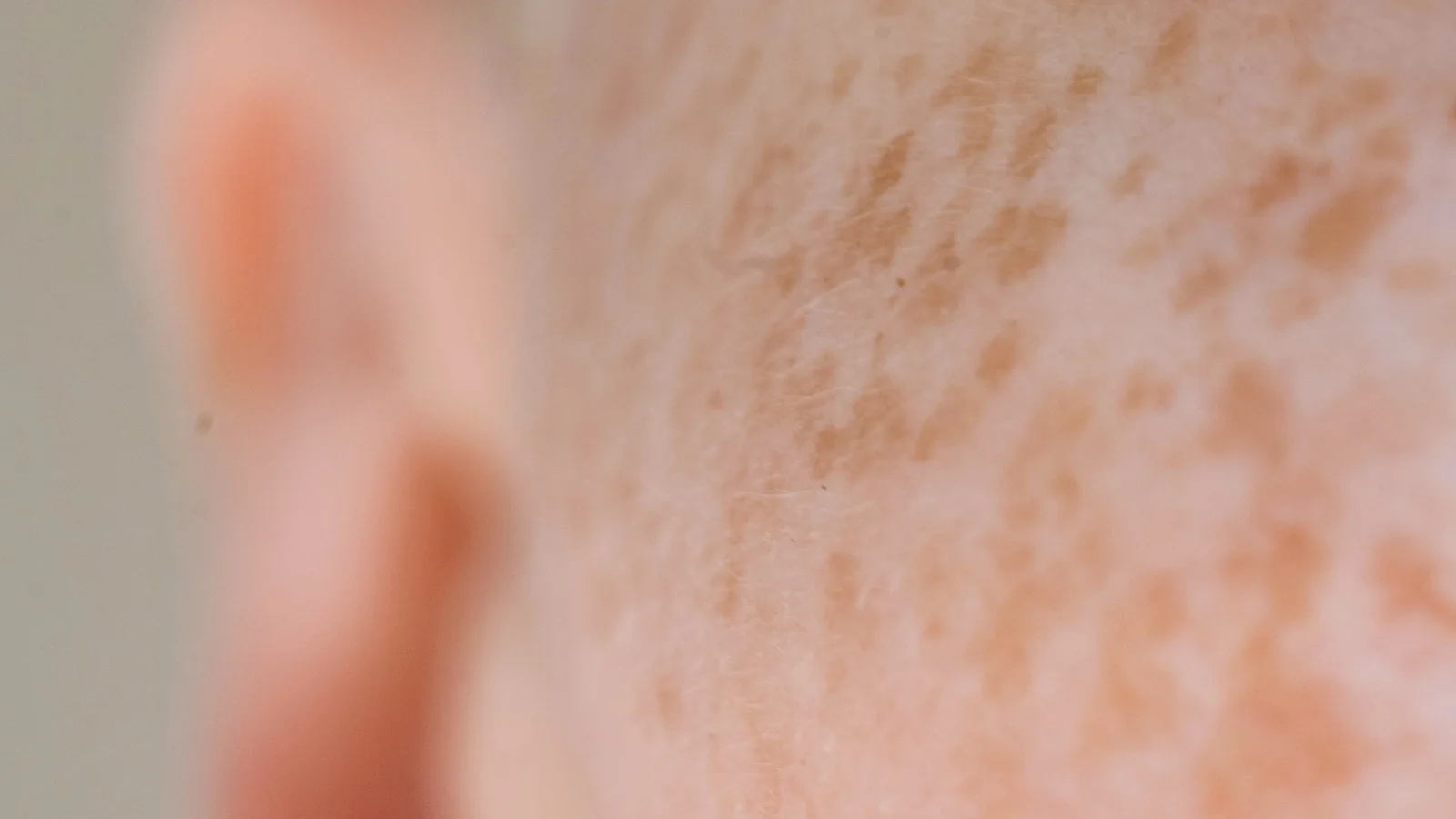

Why “dark spots” does not tell the whole story
Pigmentation is one of the concerns I discuss most often, and it is also one of the easiest to oversimplify. Two marks may look similar in a photograph and still need completely different care, because colour alone does not tell us the cause.
A mark left after acne behaves differently from melasma. A sun-related spot is not managed in exactly the same way as pigmentation caused by irritation. A changing lesion should not be approached as a cosmetic spot at all until it has been medically assessed. The first responsibility is therefore identification, not removal.
Melasma is influenced by more than the sun
Melasma commonly appears as symmetrical brown-to-grey patches on sun-exposed areas of the face. Ultraviolet radiation is important, but visible light, hormones, genetic susceptibility and changes within the skin’s vascular and dermal environment may also contribute.
This complexity helps explain why melasma can be persistent and why an isolated procedure rarely provides a permanent answer. Improvement is possible, but maintenance and trigger management are part of the treatment rather than optional extras.
Post-inflammatory pigmentation tells a different story
After acne, picking, dermatitis, a burn or an overly aggressive procedure, the skin may produce excess pigment while healing. This is called post-inflammatory hyperpigmentation. The mark is not active acne or ongoing injury, but it reflects the inflammation that came before it.
Treating the pigment without controlling the source of inflammation invites new marks to appear. For acne-prone skin, this means the plan must address active breakouts and discourage picking while gradually improving the colour that remains.
Why aggressive treatment can make pigmentation worse
Pigment-producing cells respond to inflammation. A treatment that creates more heat or injury than the skin can tolerate may lead to darker post-inflammatory marks, particularly in skin tones that pigment easily. This does not mean procedures should never be used. It means selection, preparation, settings and aftercare matter.
The strongest available treatment is not automatically the best treatment. A lower-intensity, staged approach may produce a more reliable result than one dramatic session.
Light protection is treatment, not an afterthought
For melasma and many pigment concerns, daily broad-spectrum sun protection is fundamental. Shade, hats and behavioural protection also matter because no sunscreen compensates for unrestricted exposure. Tinted products containing iron oxides may be discussed for people whose pigmentation is influenced by visible light.
Consistency is more important than perfection. Protection must continue after improvement, because the biological tendency to pigment may remain.
“Pigmentation is rarely managed well by chasing colour alone. The plan must also reduce the inflammation, light exposure or biological tendency that keeps recreating it.”
Where skincare fits
Topical plans may include ingredients intended to reduce pigment production, increase cell turnover or calm inflammation. Prescription options require medical guidance, and even non-prescription brightening products can irritate when combined carelessly.
A barrier-conscious routine is essential. If the face is stinging, peeling or inflamed, adding more brightening acids can create exactly the irritation that sustains uneven tone.
Where lasers and light-based treatments fit
Selected laser and light treatments can be useful for specific pigment concerns, but the device must match the target. Some light-based approaches may complement an established melasma plan, while other pigment patterns may respond differently. The presence of recent tanning, active irritation and the person’s tendency to develop pigmentation affect suitability.
A procedure should be presented as one element in a long-term strategy, not as a guarantee that pigment will never return.
The importance of colour, depth and pattern
Before treating pigmentation, I look at the complete pattern:
- Colour — brown, grey, red-brown or mixed.
- Depth — whether the pigment appears superficial or deeper.
- Distribution — symmetrical, localised or linked to a particular area.
- History — whether it followed acne, irritation, sun exposure or another inflammatory event.
- Change over time — including the borders, evolution and any feature that needs medical assessment.
This is why a personalised plan may look slower than an online recommendation. It is trying to treat the actual pattern rather than the category of “spots”.
What realistic improvement looks like
Pigmentation often changes gradually. The first sign of progress may be a more uniform background tone rather than the disappearance of every mark. Some areas respond faster than others, and photographs taken in consistent lighting are more useful than daily mirror inspection.
Recurrence is not always evidence that treatment failed. It may reflect renewed sun exposure, hormonal influence, inflammation or the chronic nature of melasma. The plan then shifts towards maintenance.
When a dark mark is not an aesthetic matter
A new or changing mole, an irregularly shaped lesion, a spot with several colours, bleeding, persistent crusting or a lesion that looks different from the others should be assessed medically. No aesthetic procedure should be used to remove or disguise a lesion that has not been appropriately evaluated.
For me, good pigmentation care is patient care: knowing when to treat, when to protect, when to slow down and when to refer.
Practical guidance
Questions patients often ask
General information supports understanding, but personal suitability and safety still depend on individual assessment.
01Is every dark facial patch melasma?
No. Dark marks may come from sun exposure, acne, irritation, inflammation, medication or other conditions. Assessment is important before treatment.
02Can melasma be permanently cured?
Melasma can often be improved, but it may recur. Long-term light protection and maintenance are commonly needed.
03Can laser make pigmentation worse?
Yes, if the wrong treatment, settings or timing create excess inflammation. Careful selection and aftercare reduce risk but cannot remove it completely.
04Why do acne marks stay after the breakout clears?
Inflammation can stimulate excess pigment during healing, leaving post-inflammatory hyperpigmentation after the active lesion has resolved.
05Should I use several brightening products together?
Combining too many active products can irritate the skin and worsen uneven tone. A coordinated routine is safer than layering products randomly.
06Does sunscreen matter if I stay indoors?
Incidental daylight and visible light may still be relevant for some pigment conditions. The appropriate protection plan depends on your environment and diagnosis.
07How quickly should pigment treatment work?
Improvement is usually gradual and varies by cause, depth, skin response and consistency of protection.
08Can pigmentation be treated in summer?
Some plans can continue, but recent tanning and intense exposure may limit procedures. Timing should be assessed individually.
09Why might I need a dermatologist?
Medical evaluation is needed when the diagnosis is uncertain, prescription therapy is indicated or a lesion is new, changing, irregular or symptomatic.
10What is the best first step?
Begin with assessment, stabilise irritation, establish reliable light protection and then choose treatment according to the actual pigment pattern.

ABOUT THE AUTHOR
Franciele Sofiati
Your natural skin deserves understanding, protection and patience, not impossible standards.
Care, in context
Bring the information into your context.
Treat the pattern, not only the colour. Personalised consultations are available in Londrina.
An assessment can consider your history, preparation, recovery and alternatives. Reading an article does not confirm that a procedure is suitable for you.
Continue reading
Related perspectives
Laser & Technology · 5 min
Beyond ‘Sensitive Skin’: Understanding Persistent Redness and Visible Facial Vessels
Read next
Consultation & Care · 6 min
When More Is Not Better: Rebuilding a Skin Barrier Overwhelmed by Skincare
Read next
Skin Health · 6 min