Melanina
Pigmento presente nos pelos e na pele. Pode ser o alvo na redução de pelos e em determinados tratamentos de pigmentação.

Laser
CUIDADO COM LASER
 Franciele Sofiati · Biomédica | Esteticista | Cosmetóloga
Entenda o que diferentes tecnologias fazem e por que a avaliação é importante.
O QUE É LASER
Pigmento presente nos pelos e na pele. Pode ser o alvo na redução de pelos e em determinados tratamentos de pigmentação.
Um componente do sangue direcionado por tecnologias selecionadas para vasos superficiais ou vermelhidão.
Um dos principais alvos no resurfacing ablativo com CO₂, que permite um tratamento microscópico controlado.
Comprimentos de onda e características de pulso específicos podem fragmentar determinadas partículas de tinta.
Primeiro, o alvo. Depois, a tecnologia. Por fim, os parâmetros. Apenas o nome do aparelho não determina a indicação.
O mesmo alvo pode responder de maneiras diferentes conforme as características da pele, a cicatrização, o histórico de tratamentos e os parâmetros selecionados.
O QUE O LASER NÃO É
O laser não pode prometer, de forma responsável, pele sem poros, remoção completa de cicatrizes, eliminação permanente de todos os pelos ou o mesmo resultado para todas as pessoas.
QUANDO O LASER PODE SER UTILIZADO
Redução progressiva e duradoura do número, da densidade ou da espessura dos pelos adequados ao tratamento.
Lesões pigmentadas selecionadas ou alterações de cor, depois de considerar sua causa e padrão.
Vasos superficiais selecionados de acordo com cor, profundidade, tamanho e localização.
Tratamento térmico ou ablativo controlado que pode favorecer a remodelação.
Fragmentação de pigmentos selecionados ao longo de uma série planejada.
Um caminho de renovação mais intensivo, com preparação e recuperação relevantes.

Sua pele merece a opção que se adapta a ela, não apenas a mais intensa.
TECNOLOGIAS QUE UTILIZO
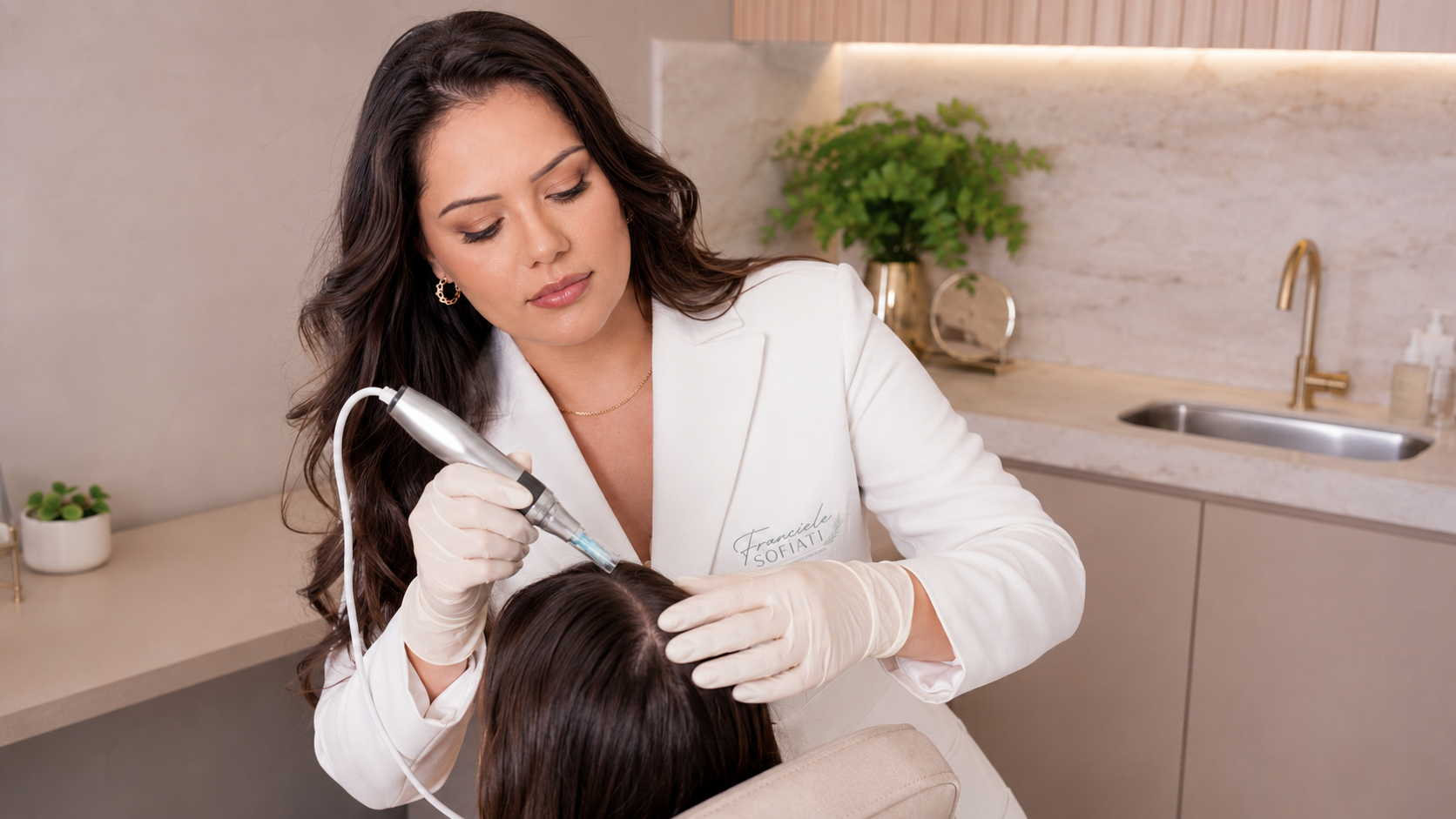
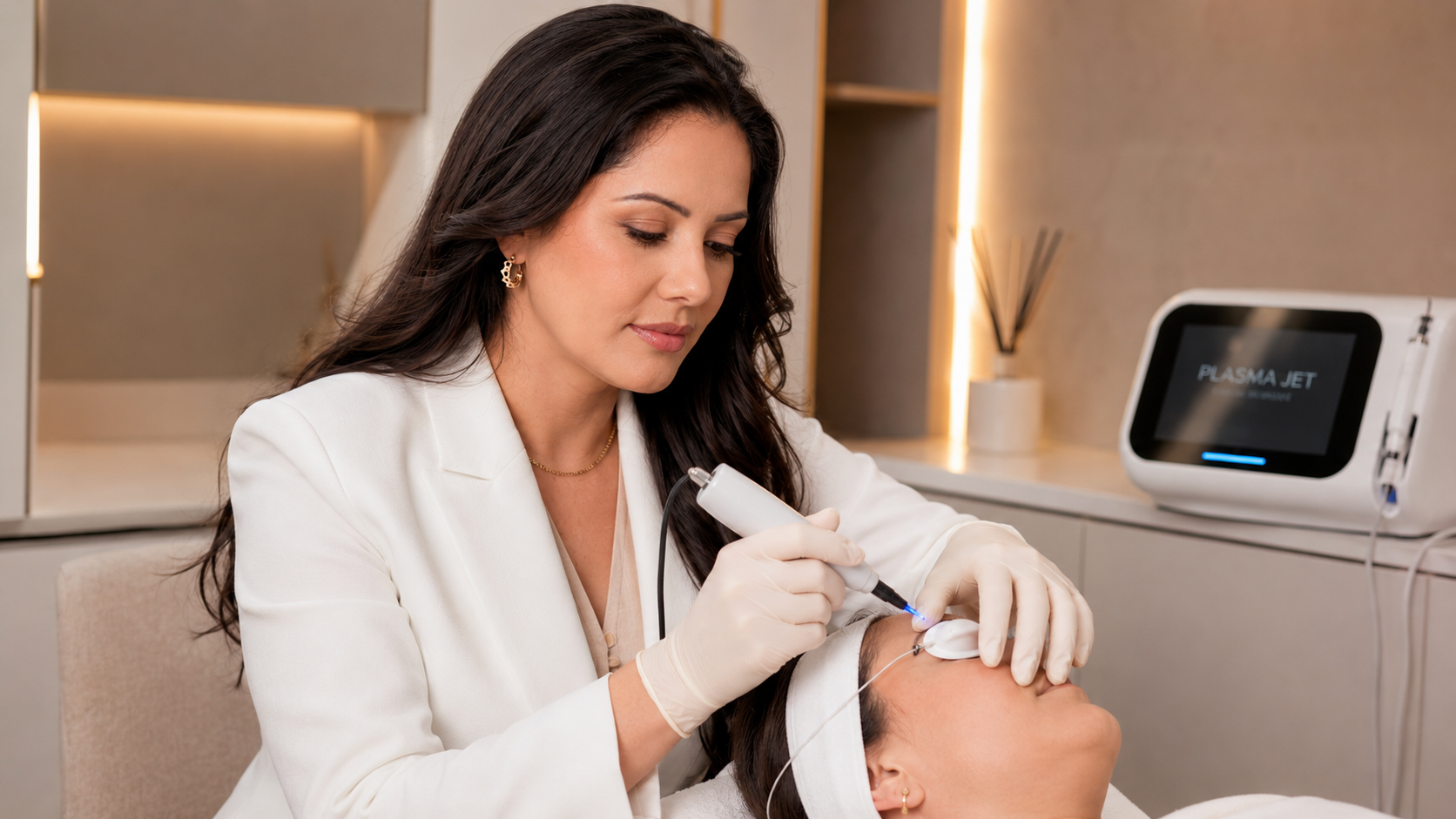
Harmony é uma plataforma com múltiplas tecnologias. Suas aplicações dependem da ponteira, do comprimento de onda e dos parâmetros selecionados. Conforme a configuração disponível, pode ser considerada para determinadas questões de pigmentação, vasos, textura, redução de pelos, cicatrizes ou tatuagens.
LightSheer Duet é um sistema de laser de diodo utilizado para redução progressiva e duradoura dos pelos. O tratamento é adaptado conforme o tom da pele, a cor e a espessura dos pelos, a área tratada, a exposição solar recente e a resposta anterior.
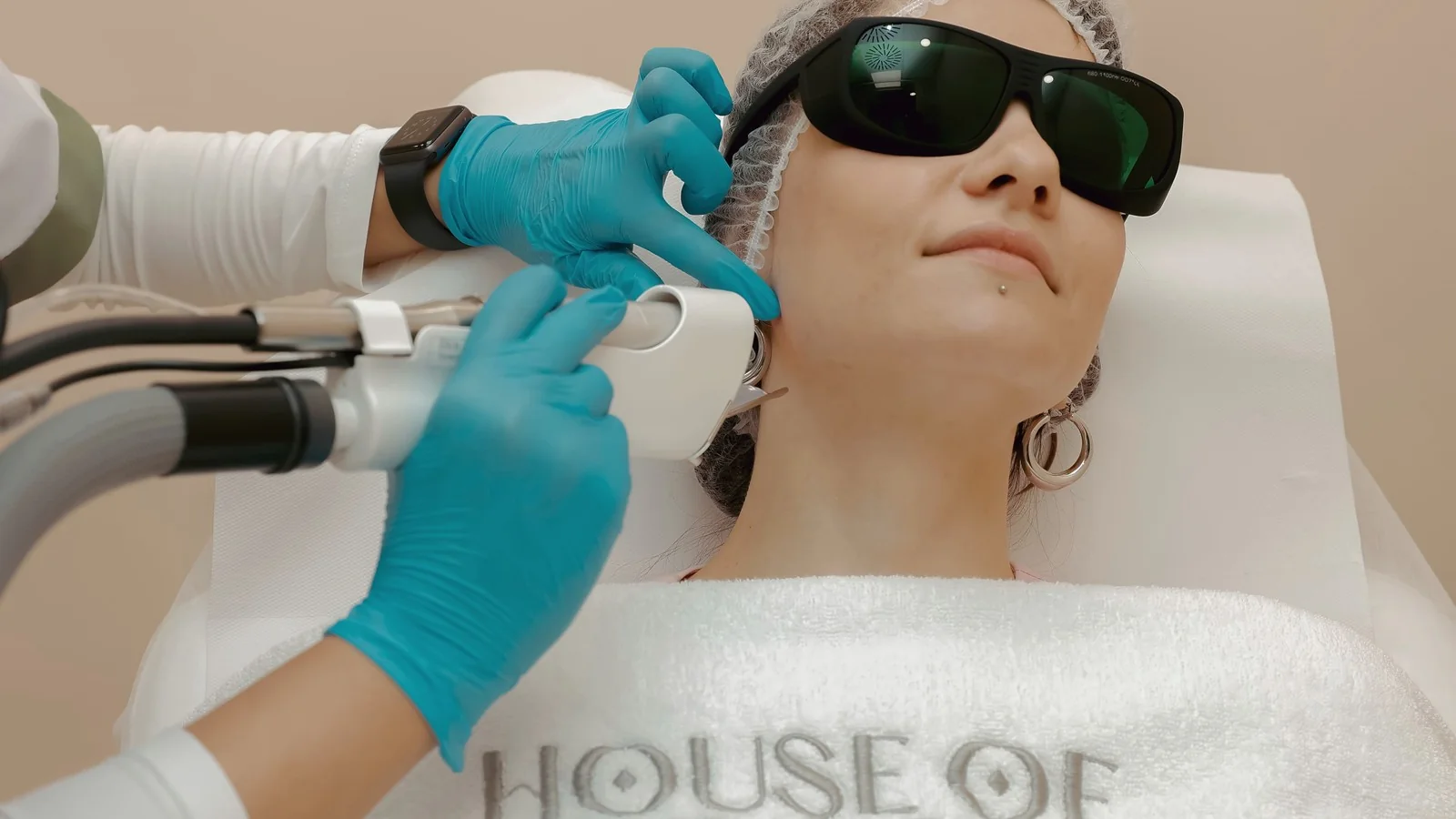
AcuPulse é um laser ablativo de dióxido de carbono utilizado em determinados tratamentos de resurfacing. Como afeta intencionalmente a barreira cutânea, exige mais preparação e recuperação do que um procedimento facial superficial.
REDUÇÃO DE PELOS A LASER
Os pelos crescem em fases. Como apenas uma parte deles está em uma fase responsiva em cada atendimento, o tratamento costuma ser planejado como uma série.
Pelos mais escuros geralmente oferecem um alvo de pigmento mais definido. Pelos muito claros, grisalhos, brancos e alguns ruivos podem responder pouco.
Pelos grossos e finos podem responder de maneiras diferentes.
A melanina também está presente na pele; por isso, o aparelho e os parâmetros devem respeitar os tecidos ao redor.
O bronzeamento altera a absorção de energia e pode influenciar o momento adequado do tratamento.
Pelos faciais e corporais nem sempre seguem o mesmo ritmo.
Alguns padrões de crescimento podem continuar surgindo e exigir manutenção ou investigação.

Um resultado gradual ainda pode representar uma mudança significativa e bonita.
RESURFACING COM CO₂
Fracionado não significa superficial.
O laser de CO₂ fracionado trata áreas microscópicas e preserva partes da pele ao redor. Esse padrão favorece a cicatrização, mas o procedimento ainda rompe intencionalmente a barreira cutânea.
A recuperação faz parte do plano.
Profundidade e densidade influenciam tanto a possível resposta ao tratamento quanto a exigência da recuperação. Maior intensidade pode significar mais vermelhidão, inchaço, descamação, sensibilidade e risco.
QUANDO ESPERAR
Pigmentação adicional ou inflamação podem alterar os riscos.
A pele sensibilizada ou lesionada pode precisar de tempo e cuidados de suporte.
Infecções bacterianas, virais ou fúngicas ativas devem ser avaliadas primeiro.
Uma marca que muda, sangra ou apresenta irregularidades não deve ser tratada simplesmente como pigmentação.
Algumas condições, padrões de cicatrização ou medicamentos podem influenciar a escolha do tratamento.
Um procedimento intensivo não deve ser encaixado à força em uma agenda inadequada.

Esperar pode ser uma escolha positiva quando protege a sua pele.
ANTES, DURANTE E DEPOIS
Revisar a queixa, o histórico, os medicamentos, os produtos, os procedimentos anteriores e a exposição solar.
Esclarecer o alvo, a tecnologia, as sensações, as reações esperadas, os limites e a recuperação.
Prepare a área e use proteção ocular apropriada.
Selecionar a ponteira e os parâmetros conforme o plano, acompanhando o conforto e a resposta.
Avaliar a área e fornecer cuidados específicos para o procedimento.
Dependendo da tecnologia: vermelhidão, calor, sensibilidade, inchaço, escurecimento do pigmento tratado, ressecamento, formação de crostas ou descamação.
 Franciele Sofiati · Biomédica | Esteticista | Cosmetóloga
A avaliação ajuda a combinar tecnologia, parâmetros e recuperação com as características individuais.