JournalSkin Health
Not Every Acne Scar Is the Same: Why Texture Requires a Layered Treatment Plan
Acne scars can look like one concern in the mirror, but up close they are often a mixture of shapes, depths and colours. That is why I never like to promise that one device or one session will treat every scar in the same way.
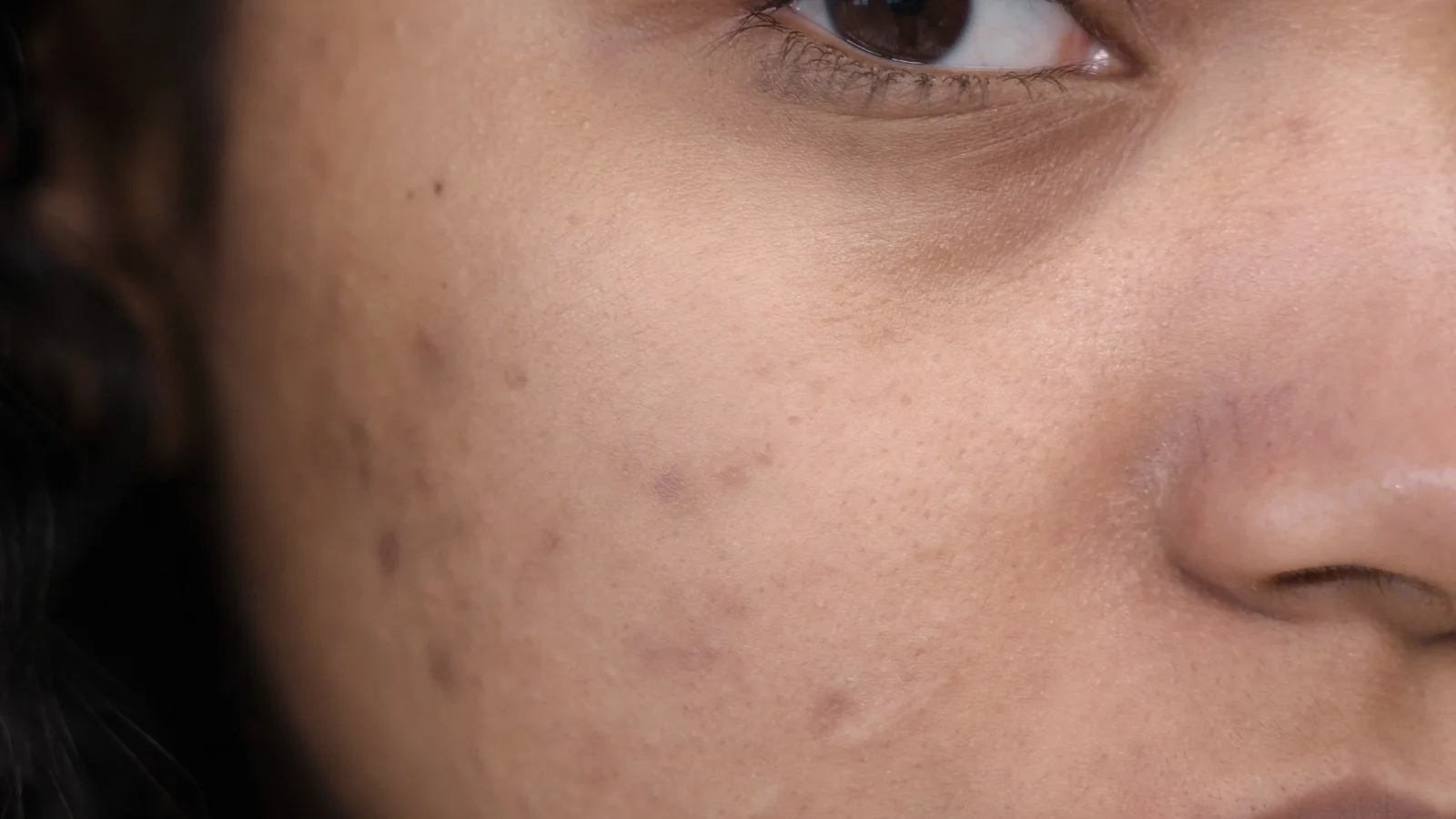

The difference between a mark and a scar
After acne settles, the skin may be left with colour, texture or both. I always separate these changes during assessment, because a flat red or brown mark is not treated in the same way as a depression, a tethered scar or a raised scar.
This distinction matters because a treatment aimed at pigment will not necessarily lift a depression, while a resurfacing treatment may not be the first choice for colour alone.
Why acne scars form
Deep inflammation can damage the supporting structures of the skin. During healing, the body may produce too little collagen, creating a depressed scar, or too much, creating a raised scar. Picking and squeezing can increase inflammation and injury, but scarring can also occur despite careful behaviour, particularly with severe acne.
Early medical control of inflammatory acne is therefore part of scar prevention. Treating old scars while new deep lesions continue to form is rarely the most coherent sequence.
Ice-pick scars: narrow but deep
Ice-pick scars appear as small, narrow openings that extend deeply into the skin. Their surface size can make them look minor, but their depth may limit the effect of broad resurfacing alone. They often require a technique that specifically addresses the narrow tract.
This is a good example of why a device should not be selected before scar mapping. A treatment that improves the surrounding texture may still leave the deepest ice-pick scars relatively visible.
Boxcar scars: defined edges and variable depth
Boxcar scars are round or oval depressions with more defined edges. Shallow boxcar scars may respond to resurfacing, while deeper scars can need a more targeted approach. Their location and the thickness of surrounding skin influence what is possible.
A patient may describe all depressions as enlarged pores, but the treatment plan changes when the edges and depth reveal a true scar.
Rolling scars: movement beneath the surface
Rolling scars create a wave-like or uneven surface and are often linked to fibrous attachments pulling the skin downward. Resurfacing the top alone may produce limited change if the tethering underneath remains.
Treatment may therefore need to address both the attachment and the surface texture. This is one reason combination plans are common in scar care.
“Acne scar treatment is less about finding the strongest device and more about matching each scar’s shape, depth and attachment to the right method.”
Why one treatment rarely solves every scar
A single face may contain several different treatment targets at once:
- Ice-pick scars — small openings that extend deeply.
- Boxcar scars — depressions with more defined edges.
- Rolling scars — wave-like texture linked to tethering beneath the surface.
- Colour changes — redness or pigmentation left after acne.
- Active acne — which often needs control before scar treatment becomes the priority.
Combination does not mean performing everything in one session. It often means sequencing methods so the skin can heal and each stage has a clear purpose.
Where fractional CO2 laser may fit
Fractional CO2 resurfacing creates controlled microscopic treatment zones while leaving intervening skin to support healing. It can improve selected atrophic scars and overall texture by remodelling collagen. Evidence supports its role, but settings, scar type, skin tone and recovery capacity matter.
It is not a universal first step. Deep narrow scars, significant tethering, active acne, recent tanning or high risk of post-inflammatory pigmentation may change the plan.
The role of patience and photography
Collagen remodelling continues after the visible recovery period. Judging the final result too early can lead to unnecessary additional treatment. Standardised photographs help because daily mirror inspection is influenced by lighting, fatigue and expectation.
Improvement may appear as softer edges, shallower depressions and a smoother transition between scars and surrounding skin rather than complete disappearance.
Skin tone and pigmentation risk
Any procedure that creates inflammation can lead to temporary or persistent pigment changes, particularly in skin that develops post-inflammatory hyperpigmentation easily. Preparation, conservative settings, sun avoidance and aftercare are essential.
The risk does not automatically exclude treatment, but it should influence method, intensity and timing.
The emotional side of scar treatment
Acne scars can affect confidence long after active acne has resolved. A consultation should allow the patient to explain which scars matter most and what change would feel meaningful. Treatment should not intensify shame or promise a flawless surface.
My goal is informed improvement: a plan that respects the skin, the person living in it and the real limits of each method.
Practical guidance
Questions patients often ask
General information supports understanding, but personal suitability and safety still depend on individual assessment.
01Can acne scars disappear completely?
Some scars can improve substantially, but complete removal cannot be guaranteed. The usual goal is to make scars softer and less noticeable.
02Are dark acne marks the same as scars?
No. Flat red or brown marks are colour changes, while depressed or raised scars involve structural change.
03Why must active acne be controlled first?
Ongoing inflammation can create new scars and complicate healing. Medical acne management may be the priority.
04Which treatment is best for acne scars?
There is no single best treatment. Scar type, depth, skin tone, active acne and recovery tolerance determine the plan.
05Does fractional CO2 laser work for every scar?
It can help selected atrophic scars and texture, but deep ice-pick scars or tethered rolling scars may need additional techniques.
06How many sessions will I need?
The number varies with severity, treatment intensity and response. A staged plan is common.
07Can scar treatment cause pigmentation?
Yes. Post-inflammatory hyperpigmentation is a recognised risk, especially in pigment-prone skin, so preparation and aftercare matter.
08How long do results take to develop?
Surface recovery occurs first, while collagen remodelling and visible improvement continue over weeks to months.
09Can I treat scars while taking acne medication?
Some medications affect timing and healing. Tell the professional and prescribing physician about all current and recent treatment.
10When should acne be managed by a dermatologist?
Medical care is important for painful nodules, cysts, widespread inflammation, scarring acne or acne that is not responding to appropriate skincare.

ABOUT THE AUTHOR
Franciele Sofiati
Beautiful improvement leaves room for real skin, expression and the features that are yours.
Care, in context
Bring the information into your context.
Map the scars before choosing the method. Personalised consultations are available in Londrina.
An assessment can consider your history, preparation, recovery and alternatives. Reading an article does not confirm that a procedure is suitable for you.
Continue reading
Related perspectives

Consultation & Care · 6 min
A Clearer Starting Point: What Professional Skin Cleansing Can — and Cannot — Do
Read next
Laser & Technology · 5 min
Fractional CO₂ Laser Without the Hype: Preparation, Recovery and the Results That Take Time
Read next
Skin Health · 6 min