JournalLaser & Technology
Laser Hair Removal Is a Process, Not a Single Appointment
One of the first things I explain about laser hair removal is that the laser is working with the hair cycle. The result is built appointment by appointment, because not every follicle is ready to respond on the same day.
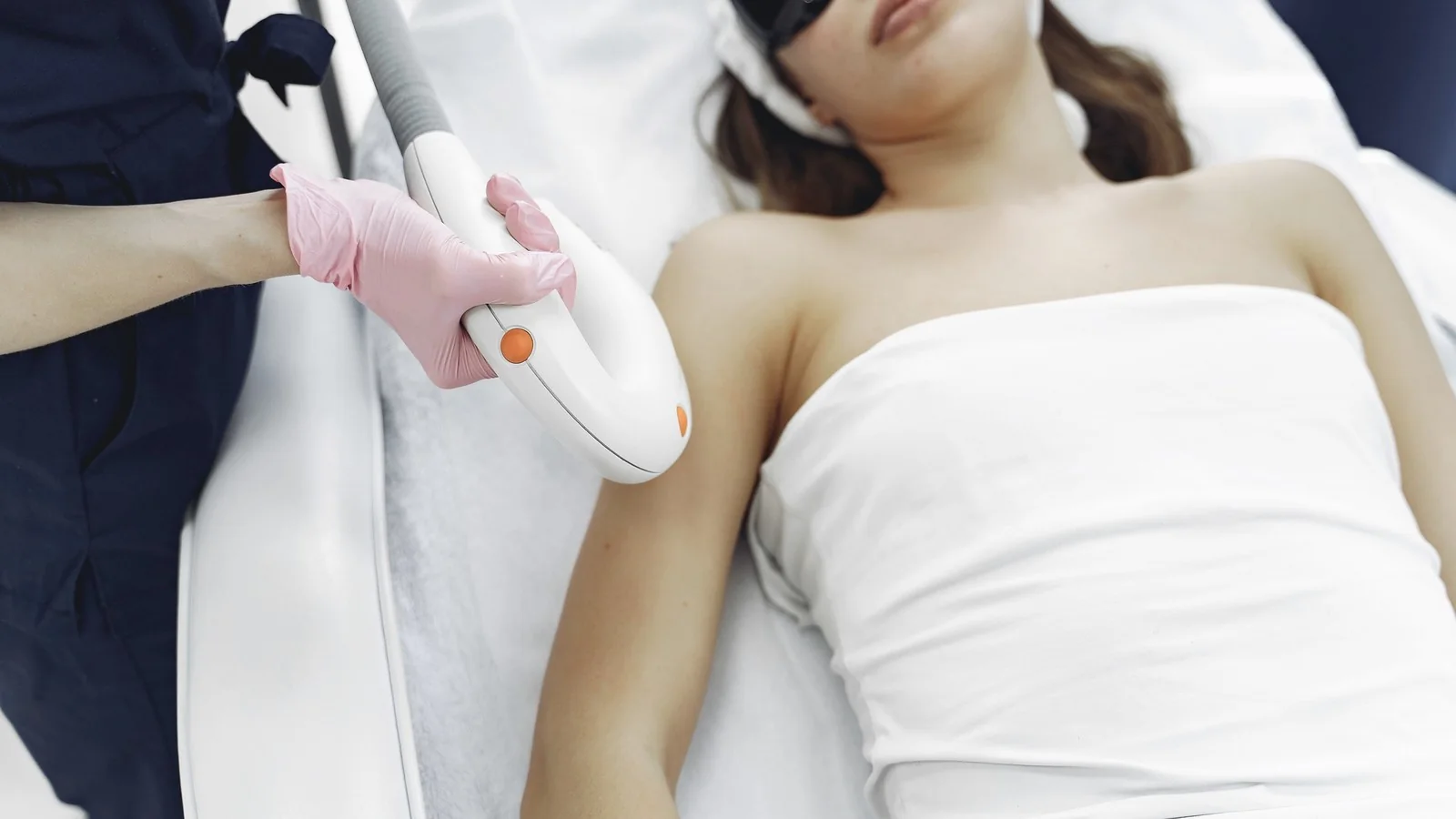

Why one session cannot treat every hair
Hair does not grow all at once. Each follicle follows its own cycle, and the laser works best when a pigmented hair is in the right growth phase. This is why one appointment can never reach every responsive follicle.
This is why repeated sessions are not a sales invention. They are an attempt to meet different groups of follicles as they enter a treatable phase.
How the laser finds the target
The technology emits light at a wavelength chosen to be absorbed by pigment in the hair. That energy is converted into heat, which can damage the structures responsible for regrowth while cooling and technique help protect the skin.
The contrast between hair pigment and skin pigment influences treatment. Dark, coarse hair often responds more readily than very light, grey, white or red hair, which may contain too little of the target pigment.
Reduction is a more honest word than disappearance
Many people experience substantial and lasting reduction, with remaining hairs becoming finer or growing more slowly. However, the phrase permanent hair removal can create unrealistic expectations. Hormonal changes, age, medication and individual biology can activate new growth.
Maintenance sessions may therefore be needed, especially on the female face or in areas influenced by hormones. A successful result can still be highly valuable even when occasional regrowth occurs.
Why the face behaves differently
Facial hair in women may be influenced by androgens and other hormonal factors. New coarse hairs can appear even after previously treated follicles have responded. Sudden or increasing facial hair, irregular menstrual cycles, acne or other signs of hormonal change may justify medical investigation.
Laser can treat the visible hair, but it does not diagnose or correct the endocrine cause.
Preparation protects the skin and the target
Before laser hair removal, preparation usually focuses on protecting both the skin and the target hair:
- Do not wax, thread or pluck — because these methods remove the structure the laser needs to target.
- Shave only as instructed — according to the area and clinic guidance.
- Avoid recent tanning and sunburn — which increase competing pigment in the skin.
- Disclose medication and skin conditions — including photosensitising substances and recent isotretinoin use.
- Never stop prescribed medication independently — changes should only be made with the prescriber.
All medications, recent isotretinoin use, photosensitising substances and skin conditions should be discussed. Medication should never be stopped without the prescriber’s guidance.
“Laser hair removal works with the hair cycle, not against the calendar. The result develops by treating different groups of follicles over time.”
What treatment feels like
Sensation varies by area, hair density and device. Many patients describe brief heat, snapping or pinching. Integrated cooling and larger treatment tips can improve comfort and efficiency. Dense coarse hair may feel stronger during early sessions and less intense as reduction develops.
Pain is not proof of effectiveness. Settings should be based on the target and skin response, not on the belief that a treatment must be unbearable to work.
The skin immediately afterwards
Temporary redness and small raised areas around follicles can occur. The skin may feel warm or sensitive. These expected reactions usually settle, but aftercare should minimise heat, friction, irritating products and unprotected sun for the period advised.
Blistering, significant burns, severe pain or unusual colour change are not routine and should be reported promptly.
Why treatment intervals change by area
Hair cycles differ across the face and body. Appointments are spaced to improve the chance of treating new growing hairs rather than repeatedly treating the same resting phase. The interval may change as the series progresses and regrowth slows.
Attending too frequently does not necessarily accelerate results and may expose the skin without adding benefit.
Skin tone and device selection
Advances in laser technology allow a wider range of skin tones to be treated, but experience, wavelength, pulse duration, cooling and settings remain essential. A patch test may be appropriate in selected situations.
A history of pigmentation after irritation should be discussed because it may influence preparation and follow-up.
What a good result looks like
Progress is often visible as slower regrowth, patchier distribution, finer hairs and less need for shaving. Photographs and consistent observation are more useful than expecting a perfectly hairless surface after a fixed number of sessions.
The best laser plan gives the hair cycle enough time, protects the skin and changes when the response tells us it should. I do not believe in following a rigid package while ignoring what the body is actually doing.
Practical guidance
Questions patients often ask
General information supports understanding, but personal suitability and safety still depend on individual assessment.
01How many laser hair removal sessions will I need?
Many people need six or more sessions, but the exact number depends on the area, hair, hormones, device and response.
02Is laser hair removal permanent?
It can provide long-term or permanent reduction in many areas, but maintenance and some regrowth are possible.
03Why does facial hair sometimes return?
Hormonal areas can develop new growth over time, even when previously treated follicles responded.
04Can blonde, grey or white hair be treated?
These hairs may contain too little pigment for conventional laser targeting and often respond poorly.
05Should I wax before treatment?
No. Waxing, threading and plucking remove the target. Follow the clinic’s shaving instructions instead.
06Can I have treatment after tanning?
Recent tanning or sunburn can increase risk and may require postponement.
07Does laser hair removal hurt?
Most people feel brief heat or snapping. Sensation varies by area and hair density, and cooling can improve comfort.
08What is normal after a session?
Mild redness, warmth and temporary swelling around follicles can occur. Severe pain, blistering or burns are not routine.
09Can laser cause darker or lighter patches?
Pigment changes are possible, especially with recent tanning, unsuitable settings or pigment-prone skin.
10When should excess hair be medically investigated?
Sudden or increasing facial or body hair, especially with menstrual changes, acne or other hormonal symptoms, should be discussed with a physician.

ABOUT THE AUTHOR
Franciele Sofiati
Confidence can be gradual; it does not need a dramatic promise to be meaningful.
Care, in context
Bring the information into your context.
Plan around your hair, skin and hormones. Personalised consultations are available in Londrina.
An assessment can consider your history, preparation, recovery and alternatives. Reading an article does not confirm that a procedure is suitable for you.
Continue reading
Related perspectives
Laser & Technology · 5 min
Fractional CO₂ Laser Without the Hype: Preparation, Recovery and the Results That Take Time
Read next
Hair & Scalp · 6 min
Hair Thinning Needs a Cause Before It Needs a Procedure
Read next
Consultation & Care · 6 min